Creating Harmonized Spaces: The Role of Matching Edge Banding in Modern Furniture
Creating Harmonized Spaces: The Role of Matching Edge Banding in Modern Furniture
Look closely at any well-finished piece of joinery and you’ll notice the edges before you notice anything else — even if you can’t quite say why. A panel edge that matches its face seamlessly disappears into the design. One that doesn’t, however subtly, is the detail that makes an otherwise beautiful piece look unfinished.
Edge banding is easy to treat as an afterthought in a specification. It shouldn’t be.
The Detail That Signals Quality
A cabinet front, a wardrobe door, a reception counter — these are judged by touch as much as sight. Run a hand along an edge and a mismatched band, a visible seam, or a slightly-off tone reads instantly as a lower-tier finish, regardless of how considered the rest of the piece is. Matching edge banding is what allows a decor to read as a material rather than a surface applied to a box.
This matters most on:
Wood grain decors, where grain direction and tone need to continue convincingly around a corner or edge.
Textured finishes like Fabric, Leather, or Freze, where a flat, glossy edge band against a richly textured face breaks the illusion entirely.
Light or Supermatt decors, where colour mismatches are more visible under direct light than on darker, patterned surfaces.
Why It's a Specification Decision, Not a Finishing Afterthought
Edge banding is often selected at the joinery workshop stage, well after the decor itself has been approved — which is exactly how mismatches happen. A decor and its edge band should be specified and sourced together, from the same range, so that colour, texture, and sheen are calibrated as one system rather than paired up after the fact.
For specifiers and joinery partners, that means:
Requesting matching edge band swatches alongside the panel sample — not assuming a “close enough” match from a generic band supplier.
Confirming edge band availability across the full decor and texture range, especially for less common textures, before committing a decor to the schedule.
Reviewing the matched edge on a full sample, not a swatch, since band-to-face transitions are hard to judge at small scale.
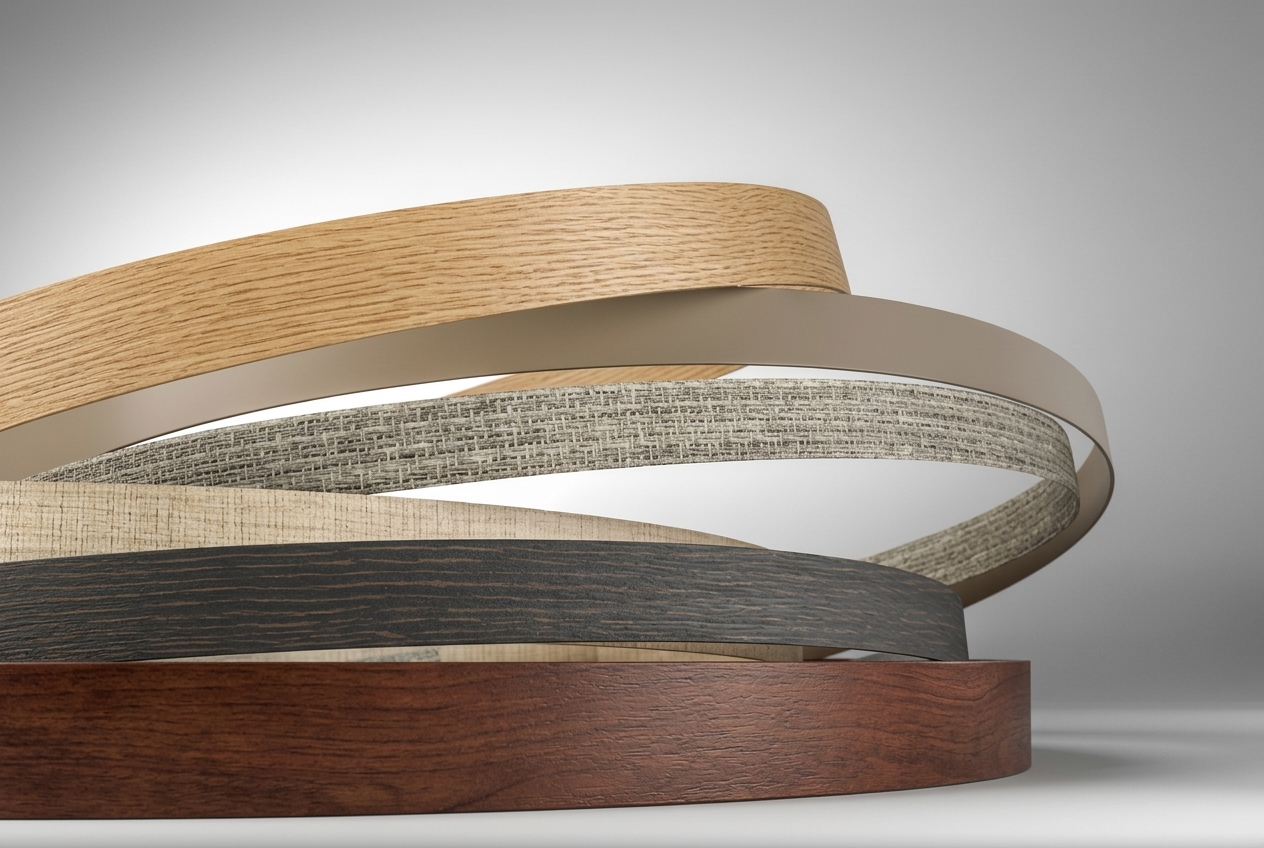
Pinta removes this guesswork by supplying matching edge bands across every colour in the range as standard — so no decor is ever left without a true face-to-edge match, regardless of how niche the finish.
Pinta provides matching edge bands for every colour in our range, so every piece of joinery reads as one considered material — face to edge.